
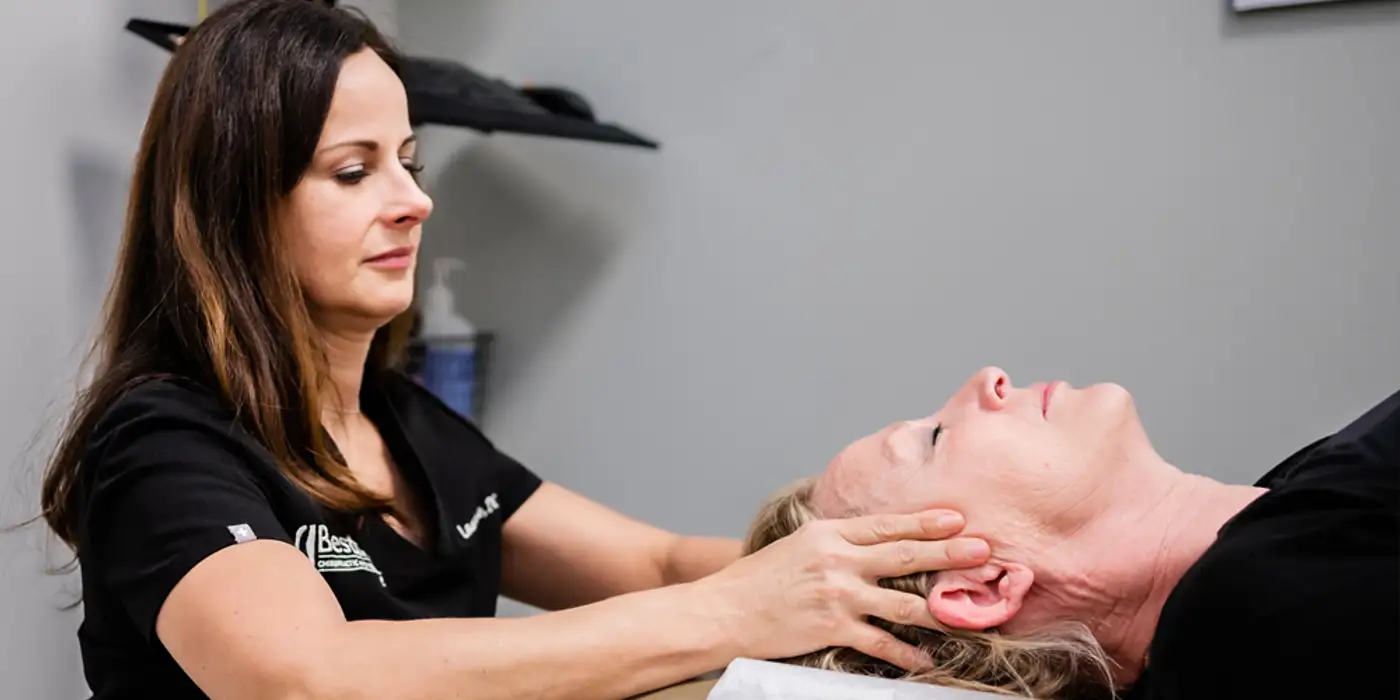
Chiropractic care for rotator cuff injury
Get to the root of your rotator cuff injury
Also known as: Rotator Cuff Tear, Rotator Cuff Tendinitis, Shoulder Impingement
If reaching overhead, sleeping on your side, or throwing a ball sends a sharp pain through your shoulder, your rotator cuff may be involved. Whether it's tendinitis from repetitive overhead work, impingement, where the tendon and bursa get pinched beneath the acromion, or a partial tear from a sports collision, our chiropractors at our Flower Mound and Plano offices offer a conservative, drug-free plan aimed at restoring strength and range of motion.
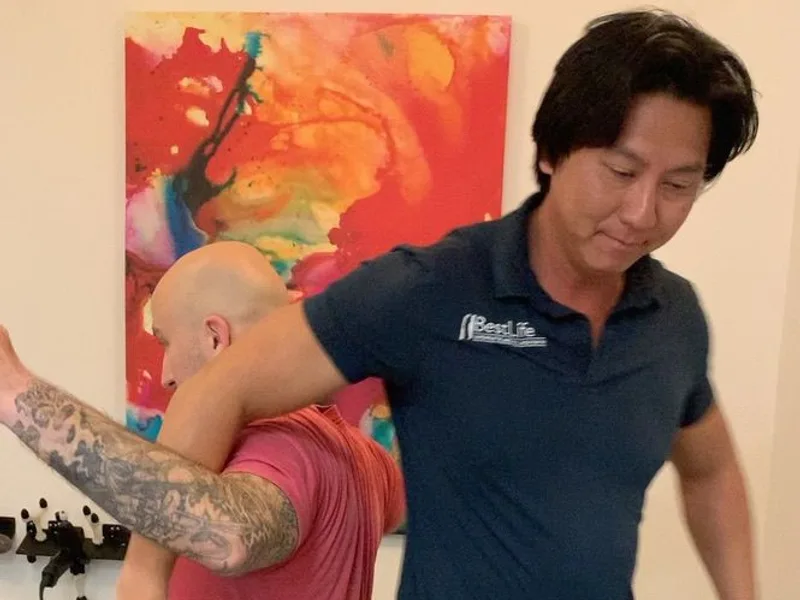
Symptoms of rotator cuff injury
- ✓A deep, dull ache in the outer shoulder or upper arm
- ✓Pain that worsens when reaching overhead or behind your back
- ✓Weakness when lifting your arm or rotating it outward
- ✓Catching, clicking, or a pinching sensation at the top of your shoulder arc
- ✓Night pain that wakes you — especially when lying on the affected side
- ✓Stiffness and limited range of motion after rest
- ✓Shoulder fatigue that limits work or sport before the arm gives out
Common causes
- Repetitive overhead work or throwing that wears the tendon over time
- Acute injury from a fall on an outstretched arm or direct shoulder impact
- Forward-shoulder posture narrowing the subacromial space
- Age-related tendon changes — rotator cuff tendons tend to thin with age
- Weakness in the rotator cuff and scapular stabilizers from disuse
- Thoracic stiffness that limits shoulder elevation mechanics
- Poor shoulder-blade control (scapular dyskinesis) during overhead movement
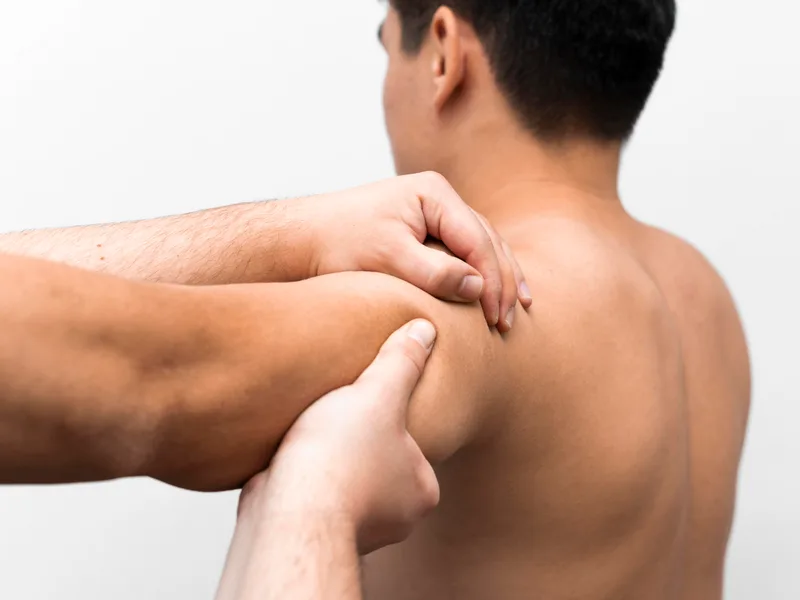
Our approach
How we treat rotator cuff injury in Flower Mound & Plano
- Step 01
Thorough exam
We assess shoulder range of motion, rotator cuff strength, impingement tests, and neck and upper-back mobility to map the source of your pain — and refer for advanced imaging such as MRI or diagnostic ultrasound when it will change your care.
- Step 02
A clear, personalized plan
You leave the first visit knowing what we found, whether conservative care is the right path, and — if it is — care recommendations matched to your condition and goals.
- Step 03
Soft tissue, adjustments & progressive loading
Care may combine shoulder and thoracic adjustments, soft-tissue release for the chest and upper back, and a progressive rotator cuff and shoulder-blade strengthening program to ease pain and rebuild the strength that supports the joint.
The basics
Understanding rotator cuff injury
The rotator cuff is a group of four muscles and their tendons — supraspinatus, infraspinatus, teres minor, and subscapularis — that wrap around the head of the humerus and hold it centered in the shallow socket of the shoulder blade. Every time you lift, throw, or reach overhead, those tendons glide through a narrow space beneath the acromion. When the shoulder mechanics are off — from weakness, poor posture, or repetitive strain — that space narrows further and the tendons can fray, become irritated, or tear. Tendinitis and impingement are the earlier stages and are commonly managed conservatively, and many partial-thickness tears are also managed conservatively first. Full-thickness or massive tears may ultimately require surgical repair, and we will tell you clearly and refer you if that's where you land.
Conservative care for the earlier stages focuses on restoring joint motion through shoulder, upper-back (thoracic), and neck adjustments, releasing the tight chest and back muscles that pull the shoulder forward, and then progressively loading the cuff with targeted rehab so the tendon can adapt and the shoulder can stay strong. It's worth having shoulder pain evaluated early rather than waiting for it to get worse.
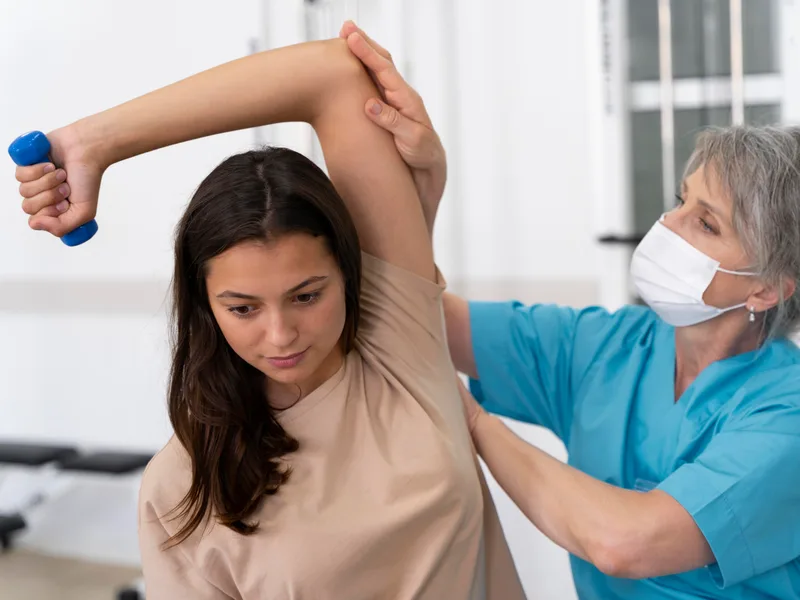
New Patient Special
$97 First visit
The same price at both our Flower Mound and Plano offices. Your first visit includes:
- Consultation with a chiropractor
- Comprehensive chiropractic exam
- Nervous system scan (INSiGHT or MyoVision)
- Doctor’s report of findings and care recommendations
X-rays are not included and are billed separately at $87 only if your doctor determines they are needed. We honor applicable insurance rates and benefits. This offer may not be combined with certain Medicare or major medical plans.

Types of rotator cuff conditions we treat
“Rotator cuff injury” covers a spectrum of presentations, and your care depends on which stage you’re in. Common patterns include:
- Rotator cuff tendinitis — irritation of one or more cuff tendons from overuse, typically the supraspinatus. Care usually includes soft-tissue release, load management, and progressive strengthening. See our related shoulder pain page for the broader shoulder picture.
- Shoulder impingement syndrome — the tendon and bursa become pinched beneath the acromion during elevation. Often linked to forward-shoulder posture and shoulder-blade weakness, both of which we address directly.
- Subacromial bursitis — the bursa cushioning the tendon becomes inflamed and swollen, adding to impingement pain. Conservative care and posture work aim to calm it down; see our bursitis page.
- Partial-thickness rotator cuff tear — the tendon is frayed but not fully torn through. Progressive tendon loading with isometric and eccentric exercises is a common conservative path for many partial tears.
- Rotator cuff weakness from overuse or disuse — the cuff muscles weaken after injury or prolonged rest, leaving the shoulder vulnerable to re-injury. Corrective exercise is the cornerstone of care here.
- Recovery after surgery — once your surgeon has cleared you for rehab, we can talk about whether supportive care and corrective exercise fit your recovery, working within your surgeon’s guidelines.
If you’ve been told you have a full-thickness tear and want to understand your options, an exam can help clarify whether a supervised conservative trial is a reasonable option. Overhead athletes dealing with overuse injuries often show early-stage cuff problems that are worth catching before they progress.
When to see a chiropractor in Flower Mound or Plano
Don’t wait until the shoulder is completely locked up or your arm gives out on the job. Consider booking an exam if you notice:
- Shoulder pain or weakness when lifting your arm above shoulder height
- Aching that lingers after activity or wakes you at night
- A catching or pinching sensation at the top of your shoulder arc
- Shoulder pain that followed a fall, collision, or sudden forceful pull
- Pain or tingling that travels from the shoulder into your arm or hand
- Shoulder stiffness that gets worse with rest and doesn’t loosen up with movement
Seek emergency care if you experience severe shoulder pain with inability to move the arm at all after a direct trauma — a significant full-thickness tear, dislocation, or fracture may be present. If you felt or heard a pop with sudden weakness or can’t lift your arm, seek prompt medical evaluation.
What to expect at your first visit
Your first visit is our New Patient Special, focused on understanding your shoulder before any care begins:
- Consultation with a chiropractor — when it started, what movements provoke it, whether it’s related to a specific incident, and how it’s limiting your work, sport, or sleep.
- Comprehensive chiropractic exam — orthopedic and neurological testing, including rotator cuff strength and length testing, impingement tests, shoulder and upper-back range of motion, and a neck screen.
- Nervous system scan — an INSiGHT or MyoVision scan, included in every New Patient Special.
- Report of findings — your doctor explains what they found in plain English, whether conservative care is appropriate, whether imaging is needed first, and what they recommend.
X-rays aren’t part of the first visit; they’re taken only if your doctor determines they’re needed. How often you come in after that depends on your condition and goals — some patients come several times a week, others once a month.
Drug-free, non-invasive rotator cuff care
Chiropractic care for the rotator cuff is drug-free and non-invasive, and it centers on the mechanics and strength that let you use your arm comfortably. That means releasing the tight muscles pulling the shoulder forward, restoring motion in the shoulder, upper back, and neck, and then progressively loading the tendon so it can adapt and strengthen over time. Some tears do need surgical repair.
Why patients in Flower Mound and Plano choose Best Life
Patients from Flower Mound, Plano, and nearby communities such as Coppell, Lewisville, McKinney, and Allen choose Best Life for shoulder care because we examine thoroughly, explain clearly, and build a plan matched to your stage of injury. Dr. Laura Le and Dr. Steven Le both hold the CCSP sports chiropractic certification, and our team combines chiropractic adjustments of the shoulder, upper back, and neck with hands-on soft-tissue work and a progressive corrective exercise and athlete care program.
Ready to find out what’s driving your shoulder pain? Our New Patient Special makes your first visit easy, and you can book an appointment at either office. Questions about insurance or payment? See our payment options or call either office.
Treatment options
Services we use to relieve rotator cuff injury
Chiropractic Care
Chiropractic care in Flower Mound and Plano, TX, with a thorough exam and gentle adjustments focused on the underlying cause of back pain, neck pain, and headaches.
Learn more →Physiotherapy
Physiotherapy and corrective exercise in Flower Mound & Plano, TX help rebuild strength, mobility and movement control as part of your chiropractic care.
Learn more →Athlete Care
Athlete care in Flower Mound & Plano, TX with CCSP-certified sports chiropractors on our team and a staged plan for strains, sprains and overuse injuries.
Learn more →Related conditions
Other conditions we treat in Flower Mound & Plano
Patient Stories
Loved by Families in Flower Mound & Plano
400 Google reviews · 273 in Flower Mound (5.0 out of 5) · 127 in Plano (4.9 out of 5)
Rated 5 out of 5
I have no complaints at all, I was treated and attended very well. I believe they are the highest caliber professionals on their clinic.
Rated 5 out of 5
Finding the time and energy to care for yourself can be hard (especially as a parent). So when you find the right place with the right experts, you want to take care of yourself and put yourself first 😊 finding the right chiropractor for you can almost be as hard as finding a hairdresser (mommas, am I right?). I have been blown away with the care I have received with everyone in this office - from the moment I walk in, til I wave goodbye and say see u later! I truly felt trust (from my first visit), they listen (not just to what I say, but to my body), they care and they are a fun, energetic group! I am excited I have found a life-long partner in my health journey! Bren 🤠🙌
Rated 5 out of 5
I was referred to Best Life Chiropractic by my friend Deandra, who is part of the team, and I'm so glad I took her recommendation! Everything she told me about the care, the people, and the experience has proven to be true. The staff here are truly amazing! From my very first visit, I could tell this office was different. The initial scans and assessments provided incredible insight into my body's alignment and areas of tension. I love that my care is based on what my body is actually showing, not just what I can explain with words. Every treatment is personalized with my comfort and overall well-being in mind. Dr. Laura and her staff genuinely care about their patients. Their compassion, faith, and love for people shine through in everything they do. You never feel like just another patient, and it's clear they truly love what they do. This is hands down the best chiropractic experience I've ever had! I'm incredibly grateful for this team and cannot recommend them enough!
read more reviews on Google Flower Mound reviews on Google (opens in a new tab) Plano reviews on Google (opens in a new tab)
All Patient ReviewsWhat causes a rotator cuff injury?
Many rotator cuff injuries develop from cumulative overuse — repetitive overhead lifting, throwing, or reaching that gradually wears the tendon. A single traumatic event like a fall or collision can also tear the cuff. Contributing factors include forward-shoulder posture, weak shoulder-blade stabilizers, a stiff upper back, and natural tendon changes with age.
Can a chiropractor help a rotator cuff injury?
Chiropractic care may help with tendinitis, impingement, and some partial tears. Conservative care focuses on restoring shoulder mechanics, releasing tight surrounding muscles, and progressively strengthening the cuff. Full-thickness tears may need a surgical evaluation.
How do I know if I have a rotator cuff tear or just tendinitis?
Both produce shoulder pain, but tears tend to cause more weakness and a greater loss of active range of motion. Impingement tests and strength testing during your exam give a good clinical picture. When the findings suggest a significant tear, we refer for an MRI or diagnostic ultrasound to confirm before recommending a plan.
How many visits will I need?
It depends on your condition and goals, including the stage of your injury and how your shoulder responds. Some patients come in several times a week, others once a month. After your exam, your chiropractor will explain their recommendations so you know what to expect.
Will my insurance cover rotator cuff chiropractic care?
Questions about insurance or payment? See our payment options page or call either of our offices in Flower Mound or Plano, and our team will be glad to help before your first visit.
Is chiropractic treatment for the rotator cuff safe?
Chiropractic care for the shoulder is generally well tolerated. Your first visit includes a comprehensive exam to check for anything that makes care inappropriate. Adjustments to the shoulder, upper back, and neck are gentle, and exercise is progressed in stages so the tendon isn't overloaded before it's ready.
What if I need surgery — do you still refer out?
Yes. Full-thickness or massive tears, or partial tears that don't improve with a fair conservative trial, should be evaluated by an orthopedic specialist. We'll tell you when we think that's the right step and refer you, and you're welcome to share your exam findings with the surgeon.
Can I still exercise with a rotator cuff injury?
Lower-body and core work that keeps the shoulder unloaded is usually fine. We give you specific guidance on what to modify or avoid while the shoulder heals, and the rehab we prescribe is designed to load the cuff safely through its recovery rather than avoid it entirely.
Do you treat rotator cuff injuries from sports?
Yes. Overhead athletes — swimmers, pitchers, volleyball players, and people who lift overhead in the gym — commonly deal with rotator cuff problems, as do workers who reach overhead all day. Dr. Laura Le and Dr. Steven Le both hold the CCSP sports chiropractic certification, and athlete care is part of what we offer.
Does rotator cuff injury cause neck pain too?
It can work both directions. A stiff lower neck can alter how the shoulder blade moves and increase cuff loading. Chronic shoulder guarding can also tighten the upper trapezius muscles and contribute to neck pain. When that overlap is present, we assess and care for both in the same plan.