
Chiropractic care for disc injury
Get to the root of your disc injury
Also known as: Herniated Disc, Bulging Disc, Slipped Disc, Disc Herniation
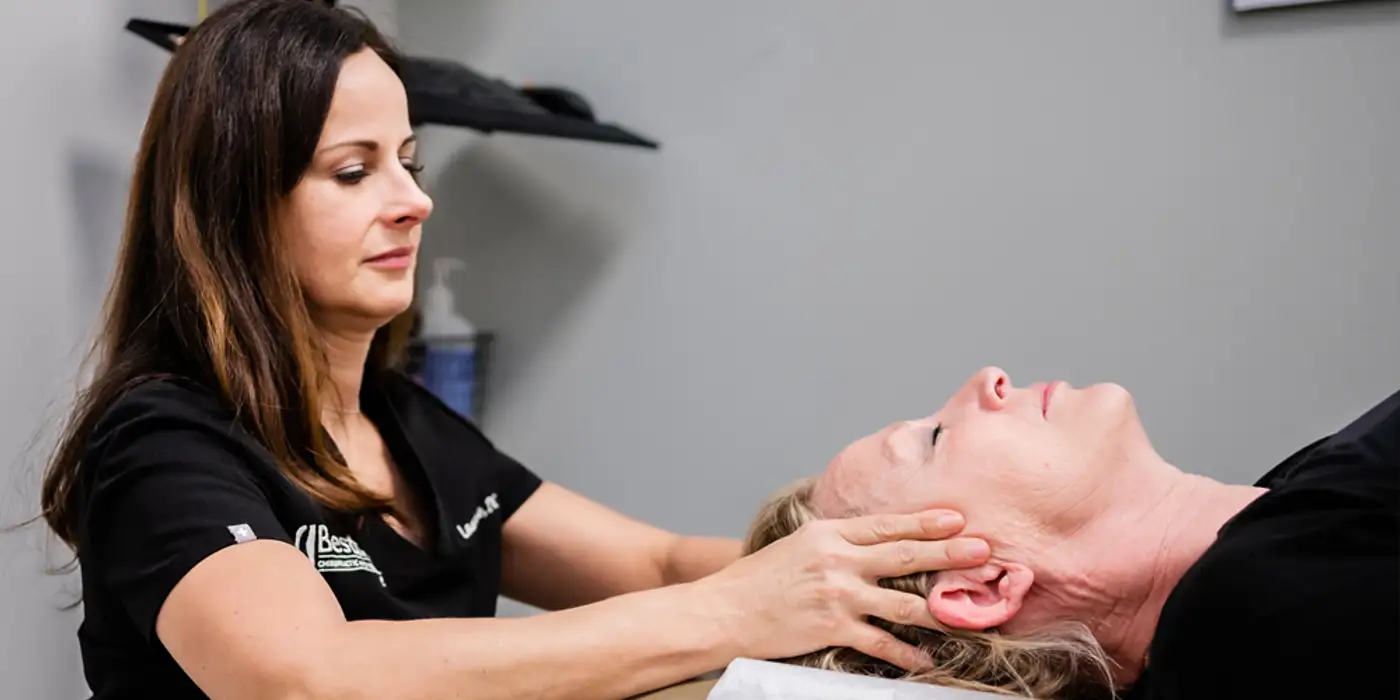
A herniated or bulging disc can put your life on hold, with shooting pain down a leg, numbness in your fingers, or a back so stiff it's hard to get out of bed. Best Life Chiropractic's care for disc injuries may include non-surgical spinal decompression, gentle chiropractic care and rehabilitation. Our goal is to reduce stress on the injured disc, ease nerve irritation and help you get moving again, all without drugs or surgery.
Symptoms of disc injury
- ✓Sharp or burning pain in the lower back or neck
- ✓Pain that radiates down one arm or leg, often into the hand or foot
- ✓Numbness or tingling in an arm, hand, leg or foot
- ✓Muscle weakness in the affected arm or leg
- ✓Pain that worsens with prolonged sitting, bending forward or coughing
- ✓Relief when lying down or changing position
- ✓Stiffness and reduced range of motion in the spine
Common causes
- Age-related disc degeneration, as discs lose water content and become less flexible
- Heavy lifting with poor mechanics or sudden twisting
- Prolonged sitting and forward posture that load the lumbar and cervical discs
- Repetitive occupational or athletic strain
- Trauma such as a car accident, fall or sports impact
- Genetic predisposition to disc weakness
- Excess body weight increasing compressive load on the spine

Our approach
How we treat disc injury in Flower Mound & Plano
- Step 01
Thorough exam
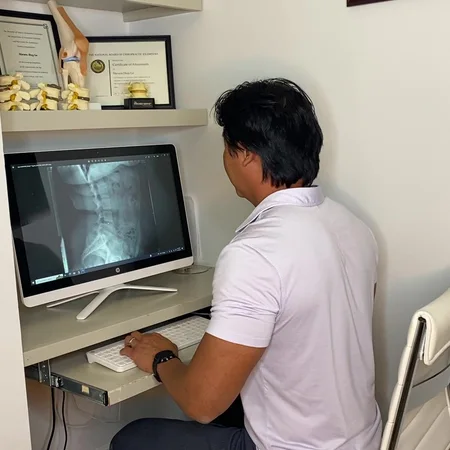
We review your history and perform orthopedic and neurological testing to locate the likely disc level and assess nerve involvement. X-rays are taken only if your chiropractor determines they are needed, and we refer for advanced imaging when it would change your care.
- Step 02
A clear, personalized plan
You get a plain-language explanation of what we found, which disc is likely involved, and care recommendations that may combine decompression, adjustments and rehabilitation. How often you come in depends on your condition and goals.
- Step 03
Gentle treatment & rehab
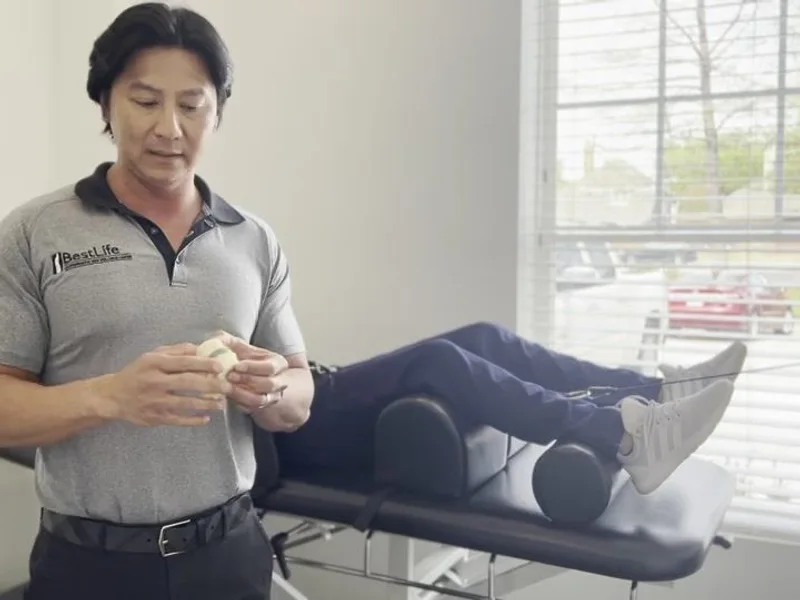
Non-surgical spinal decompression is designed to gently reduce pressure on the disc, adjustments aim to restore motion at neighboring joints, and corrective exercise rebuilds the core support that helps protect the spine.
The basics
Understanding disc injury
Your spine has 23 discs that sit between the vertebrae, absorbing shock and allowing movement. Each disc has a tough outer ring (the annulus fibrosus) and a soft, gel-like center (the nucleus pulposus). When the outer ring weakens or tears, from a sudden injury, repetitive strain or years of poor posture, the inner gel can bulge outward or push through. That bulge or herniation can press on a nearby nerve root, causing pain, numbness or weakness that travels well beyond the spine itself.
For many people, conservative, non-surgical care is a reasonable place to start. Our corrective-care approach looks for the mechanical stresses loading the disc, such as posture, movement habits and core weakness, rather than only treating the pain. We also screen for the less common warning signs (progressive leg weakness, numbness in the groin or saddle area, or bowel or bladder changes) that need urgent medical evaluation, and we refer to medical providers whenever a surgical opinion or advanced imaging is needed.

New Patient Special
$97 First visit
The same price at both our Flower Mound and Plano offices. Your first visit includes:
- Consultation with a chiropractor
- Comprehensive chiropractic exam
- Nervous system scan (INSiGHT or MyoVision)
- Doctor’s report of findings and care recommendations
X-rays are not included and are billed separately at $87 only if your doctor determines they are needed. We honor applicable insurance rates and benefits. This offer may not be combined with certain Medicare or major medical plans.

Common types of disc injury
Not all disc problems are the same. Common patterns include:
- Herniated disc — the inner gel has broken through the outer ring and is pressing on a nerve root, often causing sharp radiating pain, numbness or weakness. See our pinched nerve page for more on nerve compression.
- Bulging disc — the outer ring is intact but bows outward under pressure. It may irritate nearby nerves and cause symptoms similar to a full herniation.
- Degenerative disc disease — gradual loss of disc height and hydration over time, which can contribute to chronic back pain, stiffness and nerve irritation. Non-surgical spinal decompression is one option your chiropractor may recommend in degenerative cases.
If your disc injury has already caused shooting leg pain, see our sciatica page; the nerve and the disc are addressed together.
When to see a chiropractor in Flower Mound or Plano
If the mechanical stress behind a disc injury is still there, symptoms can linger or keep coming back. Consider booking an exam if you notice:
- Pain that shoots down your leg or arm, or wraps around the rib cage
- Numbness, tingling or a “dead” feeling in a hand or foot
- Back or neck pain that lingers more than a week or keeps returning
- Symptoms that worsen with sitting, bending, sneezing or coughing
- Pain following a car accident, fall or heavy-lifting incident
Seek emergency care (an ER, not a chiropractic office) if you develop sudden loss of bladder or bowel control, numbness in the groin or inner thighs, or rapidly worsening leg weakness. These are uncommon but serious signs that need immediate medical evaluation.
What to expect at your first visit
Your first visit is our New Patient Special. Most of it is spent understanding your problem before anything is recommended:
- Consultation with a chiropractor — when and how the pain started, what makes it better or worse, and how it’s affecting your daily life and work.
- Comprehensive chiropractic exam — orthopedic and neurological tests (such as the straight-leg raise and sensation, reflex and strength testing) to identify the likely disc level and degree of nerve involvement.
- Nervous system scan — a non-invasive INSiGHT or MyoVision scan.
- Report of findings — a plain-language explanation of which disc is likely involved, whether conservative care is appropriate for you, and your chiropractor’s care recommendations.
X-rays are not part of the New Patient Special; they are taken only if your chiropractor determines they are needed. When they are, your chiropractor explains what the images show and how the findings shape your care. X-rays show bones and alignment rather than the disc itself; an MRI is what shows a herniation. Questions about insurance or payment? See our payment options or call either office.
Non-surgical, drug-free disc care
Chiropractic care for disc injuries is drug-free and non-invasive. Its aim is to reduce pressure on the disc and nerve, give irritated tissue the chance to settle, and rebuild the support system that protects your spine.
Spinal decompression works by gently and gradually stretching the spine around the injured disc. The goal is to create space between the vertebrae and reduce pressure on the disc and the nearby nerves.
We combine decompression with gentle chiropractic adjustments to restore joint motion at neighboring levels, low-force options such as the Activator Method when a gentler approach fits better, corrective exercise and rehabilitation to build core and hip support, and home-care guidance on posture, movement and ergonomics. This approach looks at both the pain and the mechanics behind it.
Medical care has an important place too. If your exam or your response to care suggests you need imaging, a specialist or a surgical opinion, we’ll tell you honestly and refer you to the appropriate provider.
Why patients in Flower Mound and Plano choose Best Life
Patients from Flower Mound, Plano and nearby communities like Lewisville, Denton, Carrollton and Richardson choose Best Life because we’re straightforward about what your disc needs. Backed by over 20 years of clinical experience, our chiropractors combine spinal decompression, precise chiropractic adjustments and corrective exercise into one clear plan aimed at the underlying cause, not just the symptoms. Dr. Steven Le, DC, CCSP, who sees patients at both offices, has also completed a 12-hour spinal trauma certificate, which is relevant when a disc injury follows a car accident or fall.
Ready to find out whether conservative disc care is right for you? Start with our New Patient Special or book an appointment at either office.
Treatment options
Services we use to relieve disc injury
Chiropractic Care
Chiropractic care in Flower Mound and Plano, TX, with a thorough exam and gentle adjustments focused on the underlying cause of back pain, neck pain, and headaches.
Learn more →Spinal Decompression
Non-surgical spinal decompression in Flower Mound & Plano, TX gently stretches the spine and may ease pressure linked to disc problems, sciatica and back pain.
Learn more →Physiotherapy
Physiotherapy and corrective exercise in Flower Mound & Plano, TX help rebuild strength, mobility and movement control as part of your chiropractic care.
Learn more →X-Rays
Chiropractic X-rays at Best Life in Flower Mound and Plano, TX, taken only when your doctor determines they're needed and explained in plain English.
Learn more →Related conditions
Other conditions we treat in Flower Mound & Plano
Videos
Watch and Learn
Patient Stories
Loved by Families in Flower Mound & Plano
400 Google reviews · 273 in Flower Mound (5.0 out of 5) · 127 in Plano (4.9 out of 5)
Rated 5 out of 5
I have no complaints at all, I was treated and attended very well. I believe they are the highest caliber professionals on their clinic.
Rated 5 out of 5
Finding the time and energy to care for yourself can be hard (especially as a parent). So when you find the right place with the right experts, you want to take care of yourself and put yourself first 😊 finding the right chiropractor for you can almost be as hard as finding a hairdresser (mommas, am I right?). I have been blown away with the care I have received with everyone in this office - from the moment I walk in, til I wave goodbye and say see u later! I truly felt trust (from my first visit), they listen (not just to what I say, but to my body), they care and they are a fun, energetic group! I am excited I have found a life-long partner in my health journey! Bren 🤠🙌
Rated 5 out of 5
I was referred to Best Life Chiropractic by my friend Deandra, who is part of the team, and I'm so glad I took her recommendation! Everything she told me about the care, the people, and the experience has proven to be true. The staff here are truly amazing! From my very first visit, I could tell this office was different. The initial scans and assessments provided incredible insight into my body's alignment and areas of tension. I love that my care is based on what my body is actually showing, not just what I can explain with words. Every treatment is personalized with my comfort and overall well-being in mind. Dr. Laura and her staff genuinely care about their patients. Their compassion, faith, and love for people shine through in everything they do. You never feel like just another patient, and it's clear they truly love what they do. This is hands down the best chiropractic experience I've ever had! I'm incredibly grateful for this team and cannot recommend them enough!
read more reviews on Google Flower Mound reviews on Google (opens in a new tab) Plano reviews on Google (opens in a new tab)
All Patient ReviewsCan a herniated disc heal without surgery?
Many people with disc injuries start with conservative, non-surgical care. Spinal decompression, gentle adjustments and rehabilitation aim to reduce pressure on the disc and nerve while the tissue settles. Saddle numbness or new bowel or bladder changes need an emergency room right away; for progressive weakness we refer for a prompt surgical opinion.
What is the difference between a herniated disc and a bulging disc?
A bulging disc pushes outward while its outer ring stays intact. A herniated disc means the outer ring has torn and some of the inner gel has pushed through. Both can press on nearby nerves and cause similar symptoms, and both are commonly managed with conservative care first.
How does spinal decompression help a disc injury?
Non-surgical spinal decompression gently and gradually stretches the spine to create space between the vertebrae. The goal is to reduce pressure inside the disc and on irritated nerves, which may ease pain and support the healing process. Your chiropractor first checks that you are a good candidate.
How do I know if my back pain is disc-related?
Disc pain often travels into an arm or leg, worsens with sitting or bending, and may come with numbness or tingling. A thorough orthopedic and neurological exam, and sometimes imaging, is the reliable way to know. An exam at either of our offices can help you get answers.
How many visits will I need?
It depends on your condition and goals, including which disc is involved and how long you've had symptoms. Some patients come in several times a week, others once a month. After your exam, your chiropractor explains the recommendations and how progress will be checked along the way.
Do I need an MRI before coming in?
Not necessarily. Many disc injuries can be assessed clinically at the first visit. X-rays are taken only if your chiropractor determines they are needed, and if advanced imaging such as an MRI would change your care, we'll explain why and refer you to the appropriate provider.
Is a chiropractic adjustment safe when I have a disc injury?
It can be, when the technique fits the condition. Every patient is screened for contraindications before treatment, and care for disc injuries may use gentler, low-force methods such as the Activator Method, sometimes combined with spinal decompression.
What red flags should send me to the ER instead of a chiropractor?
Go to an emergency room right away for sudden loss of bladder or bowel control, numbness in the groin or inner thighs, rapidly worsening leg weakness, or severe pain after major trauma. These signs can point to a serious nerve or spinal injury that needs urgent medical evaluation.
Can disc injuries come back after they heal?
They can if the underlying mechanics, such as a weak core, poor posture or movement habits, aren't addressed. That's why our corrective-care approach includes rehabilitation and corrective exercise, to rebuild the support that helps protect the disc over the long term.
Do you see cervical (neck) disc injuries as well?
Yes. Cervical disc injuries can cause arm pain, hand numbness and neck stiffness. They are assessed with the same orthopedic and neurological testing, and care is adapted to the neck, typically with gentle adjustments and rehabilitation. Your chiropractor will explain which options suit your situation.
How do insurance and payment work?
Questions about insurance or payment? See our payment options page or call either office.