
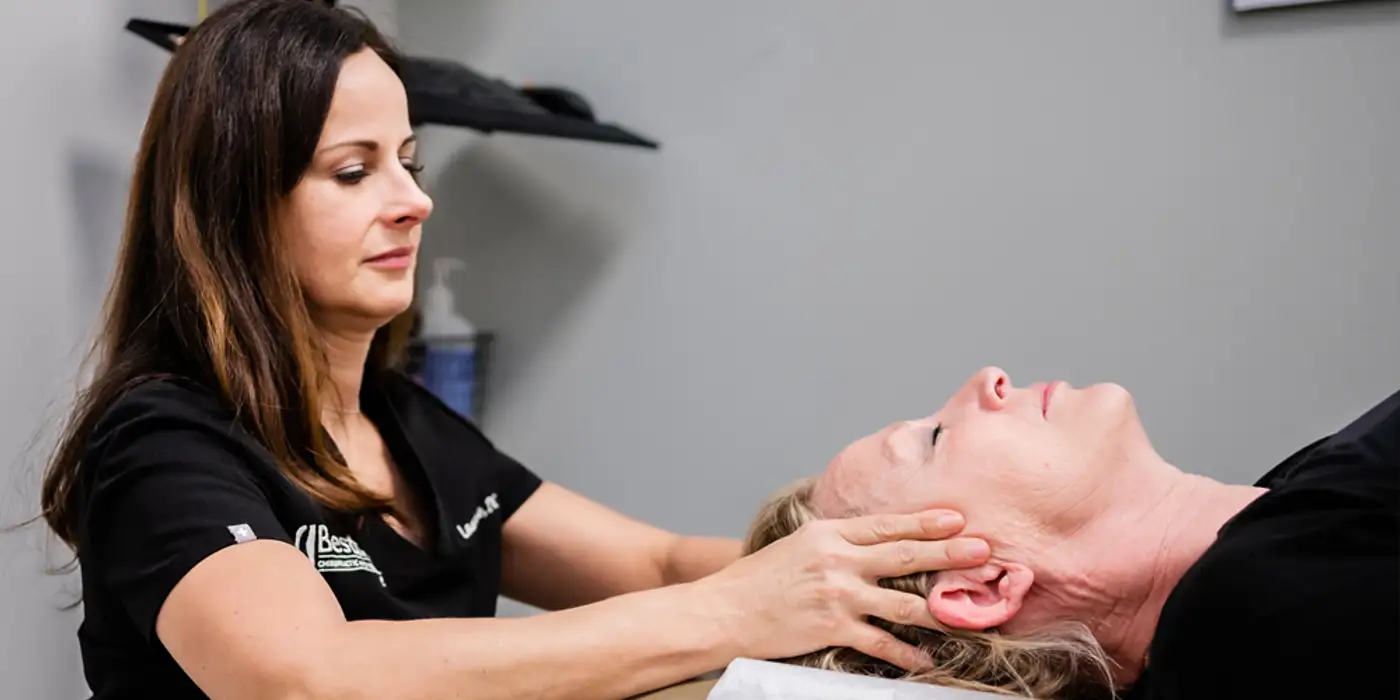
Chiropractic care for pinched nerve
Get to the root of your pinched nerve
Also known as: Nerve Impingement, Radiculopathy, Compressed Nerve
If you're dealing with sharp, radiating pain — or numbness and tingling that travels down your arm or leg — a pinched nerve may be the cause. Many people seek chiropractic care for it at our Flower Mound and Plano offices. Whether the pressure is in your neck, low back, or somewhere in between, our goal is to find what's irritating the nerve and build a clear, drug-free plan that addresses the cause, not just the symptoms.
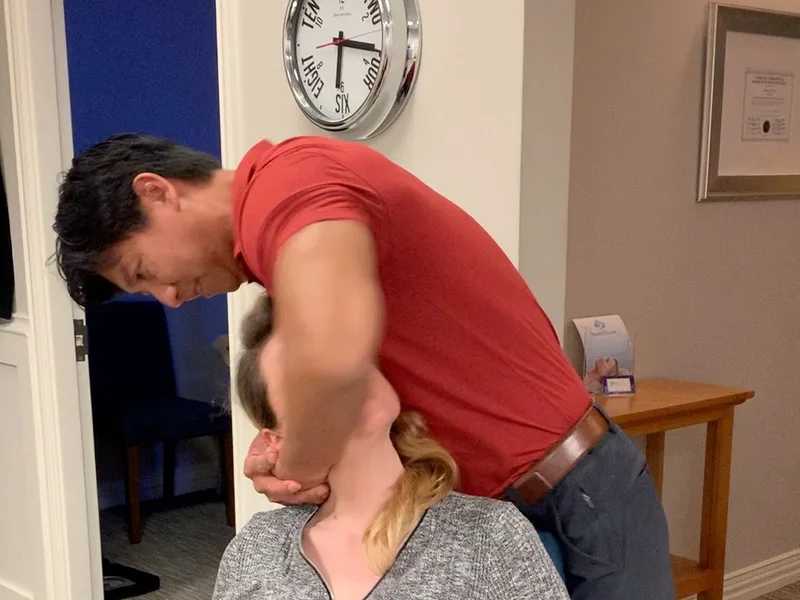
Symptoms of pinched nerve
- ✓Sharp, shooting, or burning pain that radiates into an arm or leg
- ✓Numbness or a "pins and needles" sensation along the nerve path
- ✓Weakness in a hand, arm, foot, or leg
- ✓Pain that worsens with certain positions — like looking down or sitting for long periods
- ✓Muscle fatigue or difficulty gripping objects
- ✓A dull ache at the neck or low back where the nerve originates
Common causes
- Bulging or herniated disc pressing on a nerve root
- Bone spurs from spinal arthritis narrowing the nerve canal
- Tight or inflamed muscles compressing a nerve (as in piriformis syndrome)
- Poor posture and forward-head position that load the cervical discs
- Repetitive strain or overuse injuries at work or in sport
- Auto-accident or sports trauma that affects the spine
- Degenerative disc changes that reduce space in the foramen

Our approach
How we treat pinched nerve in Flower Mound & Plano
- Step 01
Thorough exam
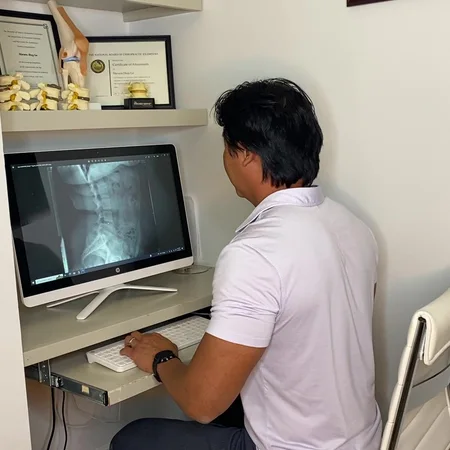
We take a detailed history and perform orthopedic, neurological, and movement testing to identify which nerve is irritated and what structure is causing it. X-rays are taken only if your chiropractor determines they're needed, and we refer for advanced imaging when it would change your care.
- Step 02
A clear, personalized plan
You get a plain-English explanation of what we found and care recommendations based on your condition and goals. We set honest expectations and tell you if your case needs a medical specialist.
- Step 03
Gentle treatment & rehab
Care may combine spinal adjustments, non-surgical spinal decompression, and rehab exercise, aimed at easing pressure on the nerve and building the stability that supports your spine.
The basics
Understanding pinched nerve
A pinched nerve happens when surrounding tissue — a bulging disc, a bone spur, a tight muscle, or an inflamed joint — presses on a nerve root as it exits the spine. In the neck (cervical spine), that pressure typically sends pain, tingling, or weakness into the shoulder, arm, or hand. In the low back (lumbar spine), it usually radiates into the hip, buttock, or leg — a pattern most people recognize as sciatica. The medical terms radiculopathy and nerve impingement describe the same basic problem from different angles.
Many people with nerve compression look for conservative, drug-free care first. Chiropractic adjustments aim to restore joint motion and reduce the mechanical irritation contributing to the compression, while non-surgical spinal decompression is designed to gently ease pressure around the disc and nerve root. The key is an accurate exam that pinpoints where the nerve is being compressed and why — so your care targets the source instead of chasing symptoms around.

New Patient Special
$97 First visit
The same price at both our Flower Mound and Plano offices. Your first visit includes:
- Consultation with a chiropractor
- Comprehensive chiropractic exam
- Nervous system scan (INSiGHT or MyoVision)
- Doctor’s report of findings and care recommendations
X-rays are not included and are billed separately at $87 only if your doctor determines they are needed. We honor applicable insurance rates and benefits. This offer may not be combined with certain Medicare or major medical plans.


Types of pinched nerves we treat
Nerve compression can occur at several points along the spine, and the symptoms depend on exactly where the pressure is. Common patterns include:
- Cervical radiculopathy (neck) — a compressed nerve root in the neck that sends pain, numbness, or tingling into the shoulder, arm, or hand, often related to a disc herniation or bone spur in the lower neck. Care may include gentle cervical adjustments and spinal decompression. See also: neck pain and arm pain.
- Lumbar radiculopathy (low back) — nerve compression in the lumbar spine that radiates into the hip, buttock, or leg. The most recognized form is sciatica, which follows the path of the sciatic nerve. Care may include spinal decompression and targeted adjustments.
- Disc-related nerve compression — when a bulging or herniated disc is involved, non-surgical spinal decompression is designed to gently ease pressure on the disc and nerve root. See our disc injury page for more on how we approach this.
- Foraminal stenosis — narrowing of the opening (foramen) where the nerve exits the spine, often from bone spurs or degenerative disc changes. Care focuses on improving spinal motion and building supportive strength through targeted rehab.
- Muscle-related nerve entrapment — a tight piriformis or scalene muscle can compress a nearby nerve even without disc involvement. Soft-tissue work such as trigger point therapy and rehab exercise are often part of care here.
Your exam tells us which pattern fits — so your plan targets the actual source of compression.
When to see a chiropractor in Flower Mound or Plano
Getting evaluated early helps you understand what’s irritating the nerve sooner. Book an exam if you notice:
- Shooting, burning, or radiating pain in an arm or leg that has lasted more than a few days
- Persistent numbness or tingling in the fingers, hand, foot, or toes
- Weakness when gripping objects or climbing stairs
- Symptoms that get worse with sitting, bending forward, or looking down
- Nerve pain that started after a car accident, fall, or heavy lifting
- Recurring episodes of nerve pain that clear up briefly and then return
If you notice rapidly progressive weakness in a limb, numbness in the groin or inner thighs, or loss of bladder or bowel control, seek emergency care right away — these are red flags for a serious spinal emergency that needs prompt medical evaluation.
What to expect at your first visit
Your first visit is our New Patient Special, focused on understanding what is irritating your nerve before any care begins. It includes:
- A consultation with a chiropractor — when symptoms started, what makes them better or worse, and exactly where the radiating pain or numbness travels.
- A comprehensive chiropractic exam — orthopedic and neurological testing (reflexes, sensation, muscle strength) to map the nerve distribution and help pinpoint the level of compression.
- A nervous system scan — using INSiGHT or MyoVision technology.
- A doctor’s report of findings — a plain-language explanation of what we found and our care recommendations, including a referral if your case warrants specialist evaluation.
X-rays aren’t part of the first visit; they’re taken only if your chiropractor determines they’re needed.
Drug-free, non-invasive pinched nerve care
Best Life takes a corrective-care approach: find and address the underlying cause of the nerve irritation rather than only treating the symptoms. We combine gentle chiropractic adjustments, non-surgical spinal decompression, and physiotherapy and rehab exercise into one coordinated plan, aimed at easing pressure on the nerve and building the stability that supports your spine. If your exam ever shows that you need advanced imaging, specialist consultation, or surgical evaluation, we’ll tell you plainly and refer you to the right medical provider.
Why patients in Flower Mound and Plano choose Best Life
Our chiropractors bring over 20 years of clinical experience to nerve pain. We take the time to map where and why a nerve is being irritated, then recommend care specific to your spine — not a one-size-fits-all protocol. Whether you’re dealing with sciatica shooting down your leg, a disc injury pressing on a nerve root, or neck pain that radiates into your arm, we use a gentle approach and screen carefully for anything that needs specialist care.
Our Flower Mound office is convenient to Coppell and Grapevine, and our Plano office to Richardson and McKinney. Ready to get started? Begin with our New Patient Special or book an appointment at either office.
Treatment options
Services we use to relieve pinched nerve
Chiropractic Care
Chiropractic care in Flower Mound and Plano, TX, with a thorough exam and gentle adjustments focused on the underlying cause of back pain, neck pain, and headaches.
Learn more →Spinal Decompression
Non-surgical spinal decompression in Flower Mound & Plano, TX gently stretches the spine and may ease pressure linked to disc problems, sciatica and back pain.
Learn more →Physiotherapy
Physiotherapy and corrective exercise in Flower Mound & Plano, TX help rebuild strength, mobility and movement control as part of your chiropractic care.
Learn more →Related conditions
Other conditions we treat in Flower Mound & Plano
Videos
Hear From Our Patients
Patient stories describe one person's experience. Individual results vary. See all videos →
Patient Stories
Loved by Families in Flower Mound & Plano
400 Google reviews · 273 in Flower Mound (5.0 out of 5) · 127 in Plano (4.9 out of 5)
Rated 5 out of 5
I have no complaints at all, I was treated and attended very well. I believe they are the highest caliber professionals on their clinic.
Rated 5 out of 5
Finding the time and energy to care for yourself can be hard (especially as a parent). So when you find the right place with the right experts, you want to take care of yourself and put yourself first 😊 finding the right chiropractor for you can almost be as hard as finding a hairdresser (mommas, am I right?). I have been blown away with the care I have received with everyone in this office - from the moment I walk in, til I wave goodbye and say see u later! I truly felt trust (from my first visit), they listen (not just to what I say, but to my body), they care and they are a fun, energetic group! I am excited I have found a life-long partner in my health journey! Bren 🤠🙌
Rated 5 out of 5
I was referred to Best Life Chiropractic by my friend Deandra, who is part of the team, and I'm so glad I took her recommendation! Everything she told me about the care, the people, and the experience has proven to be true. The staff here are truly amazing! From my very first visit, I could tell this office was different. The initial scans and assessments provided incredible insight into my body's alignment and areas of tension. I love that my care is based on what my body is actually showing, not just what I can explain with words. Every treatment is personalized with my comfort and overall well-being in mind. Dr. Laura and her staff genuinely care about their patients. Their compassion, faith, and love for people shine through in everything they do. You never feel like just another patient, and it's clear they truly love what they do. This is hands down the best chiropractic experience I've ever had! I'm incredibly grateful for this team and cannot recommend them enough!
read more reviews on Google Flower Mound reviews on Google (opens in a new tab) Plano reviews on Google (opens in a new tab)
All Patient ReviewsWhat causes a pinched nerve in the neck or back?
Common causes are a bulging or herniated disc, a bone spur from spinal arthritis, or a tight muscle that compresses a nerve root as it exits the spine. Poor posture, repetitive strain, and old injuries can all contribute. Your exam helps identify which structure is involved so care can target it directly.
Can a chiropractor help a pinched nerve?
Many people with a pinched nerve seek chiropractic care. Adjustments aim to restore joint motion and reduce the mechanical irritation contributing to the problem, and spinal decompression is designed to ease pressure around the disc and nerve root. Your exam tells us whether you're a good candidate or need a medical referral.
How many visits will I need for a pinched nerve?
It depends on your condition and goals — how long you've had symptoms, what's compressing the nerve, and how far the symptoms have spread. Some patients come in several times a week, others once a month. After your exam, your chiropractor will recommend care based on what they find.
What about insurance and payment?
Questions about insurance or payment? See the payment options page in our Resources section or call either office, and our team will be happy to answer your questions before your first visit.
Is chiropractic treatment for a pinched nerve safe?
We screen every patient thoroughly before care begins. If your exam suggests the compression is severe — or if you have progressive weakness or other red flags — we'll refer you to the appropriate medical provider rather than proceed with chiropractic care.
Do I need an MRI before seeing a chiropractor?
Not necessarily. Your first visit includes orthopedic and neurological testing, and X-rays are taken only if your chiropractor determines they're needed. If your exam suggests you need an MRI or other advanced imaging, we'll refer you to a medical provider.
How is a pinched nerve different from sciatica?
Sciatica is a specific type of pinched nerve — irritation of the sciatic nerve, which runs from the low back through the buttock and down the leg. A pinched nerve is the broader category and can occur in the neck (causing arm symptoms) or anywhere along the spine. Our sciatica page has more detail.
When should I go to the ER instead of a chiropractor?
Seek emergency care immediately for rapidly progressive weakness in an arm or leg, loss of bladder or bowel control, or numbness in the groin or inner thighs (possible cauda equina syndrome). With neck symptoms, also watch for clumsy hands, trouble walking or with balance, or symptoms in both arms or both legs, which can signal spinal cord compression.
Can a pinched nerve go away on its own?
Mild cases sometimes settle with rest and time. If symptoms have lasted more than a few days, are getting worse, or include weakness, it's worth getting evaluated so the source can be identified and you can start appropriate care. Progressive weakness always needs prompt attention.
Do you treat neck-related pinched nerve pain that goes into the arm?
Yes. Cervical radiculopathy — nerve irritation in the neck that radiates into the shoulder, arm, or hand — is something our chiropractors evaluate and care for at our Flower Mound and Plano offices. Depending on your exam, care may include gentle cervical adjustments and spinal decompression.